

Are 3D Printed Fantasy Figures for Tabletop Worth It?
Last Updated: October 30, 2026
Quick Summary
3D printed fantasy figures for tabletop are worth it because you get figures printed to order in your chosen colors and at your table's scale, so your party and monsters stay cohesive. Lock your scale before buying, since most fantasy play uses 28mm to 32mm on 1-inch grids.
- Lock your scale before buying any figure, then hold every purchase to it.
- Most fantasy tabletop play clusters around 28mm to 32mm, with 32mm increasingly common.
- Standard battle grids use 1-inch squares, with large creatures on 2-inch bases.
- Match the print method to the model: resin for fine detail, filament for larger pieces.
- Buying printed-to-order gives you a finished figure with one transparent cost.
Table of Contents
- Why 3D Printed Fantasy Figures for Tabletop Beat Store-Bought Minis
- Fantasy Miniatures for D&D: Matching Figures to Your Campaign
- Custom 3D-Printed RPG Miniatures: Making Your Character Unique
- Tabletop Miniature Scale Guide: Getting the Size Right
- 3D-Printed Dragon Miniatures: Centerpieces That Hold the Table
- Resin vs. Filament: Which Print Holds Up at the Table?
- What to Check Before You Buy: Licensing, Printability, and Total Cost
- Order Your Next Centerpiece from Snaply3D
- Frequently Asked Questions
Why 3D Printed Fantasy Figures for Tabletop Beat Store-Bought Minis
At Snaply3D, we build 3d printed fantasy figures for tabletop gamers who want more than a fixed shelf product: figures printed to order, in the colors you choose, at the scale your table demands. You pick the pose, the palette, and the character. A printed figure can be made to match your campaign. Below, we break down where printed figures win, how to size them, and what to check before you spend a dollar. Keep reading, because the scale section alone will save you from a table full of giants and halflings that don't line up.
Fantasy Miniatures for D&D: Matching Figures to Your Campaign
The best fantasy miniatures for D&D match the role your character plays, not just the class name on the sheet. A tanky fighter needs a broad, planted stance. A rogue wants a crouched, blade-forward silhouette that reads clearly across the table. When you browse a model collection, sort by role first, then by aesthetic. Heroes and adventurers should look like they belong to the same world as your monsters and fantasy creatures, or the table starts to feel like a mismatched toy bin. A cohesive party often looks better than one flashy centerpiece figure. Pick a visual theme, stick to it, and your table will look intentional every session.
Custom 3D-Printed RPG Miniatures: Making Your Character Unique
Custom 3D-printed RPG miniatures turn a character sheet into something you can hold. Customization lets your character reflect your own vision, and it is worth confirming the details with the seller before you order.
Tabletop Miniature Scale Guide: Getting the Size Right
Scale is where most collections fall apart. A figure that looks heroic on its own can look wrong beside the rest of your party, and once you've painted a mismatched set, you can't unsee it. The fix is to lock your scale before you buy a single figure, then hold every purchase to it. Here's the practical version most guides skip.
Know the three numbers that matter. Miniature scale is usually written as a ratio (1:64, 1:56, 1:48) or as a millimeter height (28mm, 32mm, 35mm). The millimeter number refers to the approximate height from the base to the top of the head on a typical human figure, not the total height of a hero with a raised sword. Most fantasy tabletop play clusters around 28mm to 32mm, with 32mm increasingly common because it gives sculptors more room for faces and gear. If your group already owns store-bought minis, measure one from base to eye line and match that number. That single measurement is your anchor.
Do the grid math before you buy. Standard battle grids commonly use 1-inch squares, with one medium humanoid per square. Large creatures, ogres, trolls, most dragons, occupy a 2-inch base, and huge creatures a 3-inch base. A gorgeous figure on an oversized, decorative base won't sit cleanly in a square, won't rank up with allies, and will overhang into the next grid cell during play. Always check the listed base diameter, not just the figure height.
Match the scale to the system, not the shelf. Most fantasy roleplaying systems are built around 28mm-32mm figures on 1-inch grids. Mixing very different scales can make a boss look out of place on the table.
Watch the three classic traps. First, buying by eye instead of by measurement, the single most common reason a printed figure ends up unused in a drawer. Second, confusing figure height with base size; a tall figure on a small base can still be table-legal, but a wide base on a small figure is a problem. Third, assuming every seller prints at true scale.
When you're ready to build a cohesive party, start with figures printed at the scale your table already uses. Browse the Nebula Crystal Dragon and check the listed details on the product page before checkout, it's the fastest way to guarantee your next centerpiece fits the grid instead of fighting it.

Here are the key scale numbers to lock in before you buy a single figure.
| Item | Value | Note |
|---|---|---|
| Common scale ratios | 1:64, 1:56, 1:48 | Written as a ratio |
| Common millimeter heights | 28mm, 32mm, 35mm | Base to top of head on typical human |
| Most fantasy tabletop play | 28mm to 32mm | 32mm increasingly common |
| Standard battle grid | 1-inch squares | One medium humanoid per square |
| Large creatures | 2-inch base | Ogres, trolls, most dragons |
| Huge creatures | 3-inch base | Larger than large creatures |
| Anchor measurement | Base to eye line | Match to existing store-bought minis |
3D-Printed Dragon Miniatures: Centerpieces That Hold the Table
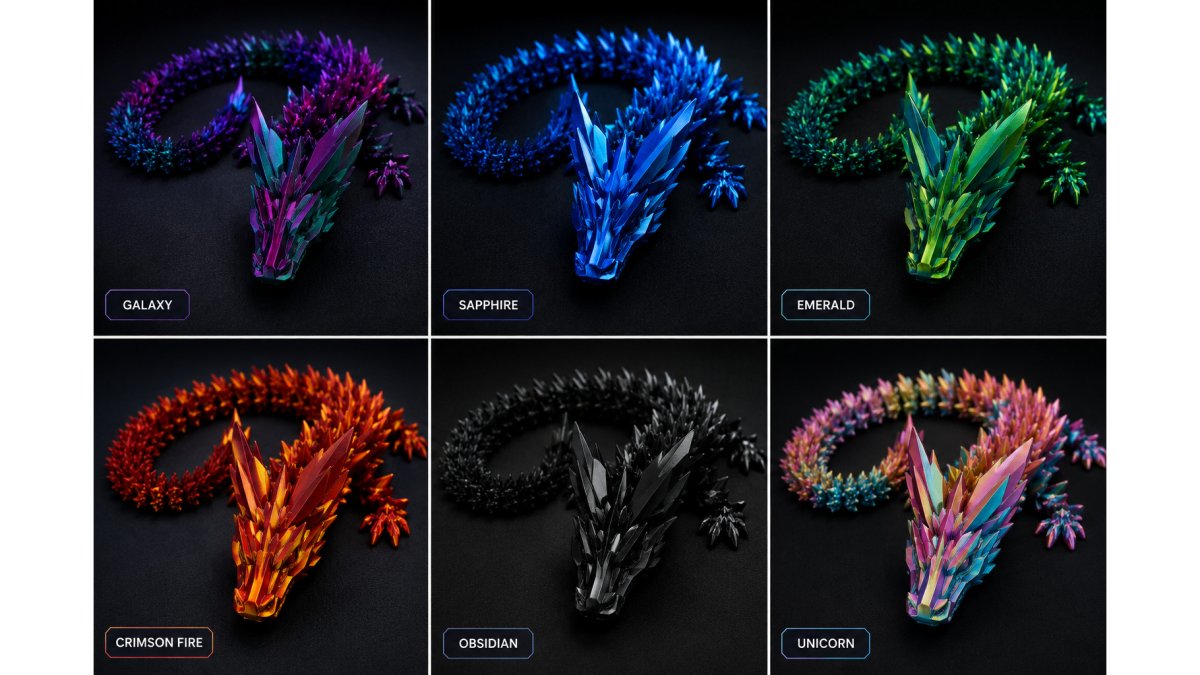
Every great table needs a figure that makes players lean in. 3D-printed dragon miniatures do that job better than almost anything else, and our Nebula Crystal Dragon shows why: an 18-inch articulated crystal dragon with a high-detail crystal-inspired design and a premium silk PLA finish, printed to order in seven color options. It's lightweight, fully articulated, and built for gaming setups, desk decor, and fantasy collections. As a centerpiece, it gives your boss encounter a physical presence that a flat token never will. Small layer lines may be visible, a normal characteristic of 3D printing, and that's part of the charm.
Nebula Crystal Dragon – 18-Inch Articulated 3D Printed Collectible →
Resin vs. Filament: Which Print Holds Up at the Table?
Resin printing is generally suited to fine detail, while filament printing is generally suited to larger pieces that handle frequent use. For tabletop use, the honest answer is: match the method to the model. Small, highly detailed heroes belong in resin. Big, handleable centerpieces belong in filament, especially when they need to survive being picked up, posed, and passed around.
What to Check Before You Buy: Licensing, Printability, and Total Cost
Three checks separate a purchase you'll love from one you'll regret: licensing, printability, and total cost. Most buyers skip all three and pay for it later. Here's how to run each one in under five minutes.
Licensing: know what you're allowed to do.
Printability: will it actually print clean?
Total cost: the file price is the smallest number. A cheap file plus failed prints plus replacement resin often costs more than a premium model that prints clean the first time. Add up the file or print price, the material, the post-processing time, and the odds of a reprint. When you buy a finished, printed-to-order figure, the cost is one transparent number.
That's the case for buying printed-to-order: you get a finished figure with one transparent cost. Shop our Nebula Crystal Dragon and skip the guesswork.
Order Your Next Centerpiece from Snaply3D
Here's the challenge: most tables have a party of painted heroes and one boring boss token. Fix that. At Snaply3D, we print premium collectibles to order, including fully articulated designs and detailed fantasy pieces built for gaming setups and displays, with a range of color options. Get started with Snaply3D and give your table the centerpiece it deserves.
Frequently Asked Questions
Are 3D printed fantasy figures ready to use, or do they need assembly?
Most 3D printed fantasy figures arrive as a single printed piece, so you can place them on the table straight out of the box. Articulated designs like the Nebula Crystal Dragon come fully assembled with moving joints, while some multi-part models may require minor assembly. Always check the product listing for assembly notes before ordering. If a figure does need assembly, it usually involves attaching a base or a weapon with a small amount of glue.
What scale should tabletop fantasy figures be?
Most tabletop RPGs use 28mm to 32mm scale, where a standard human figure stands about 1 to 1.25 inches tall. Larger creatures like dragons are typically sized up from standard figures. Before buying, measure your battle grid and confirm the base size fits your mat. A figure that is too large crowds adjacent squares, while one that is too small looks out of place next to your other miniatures.
Are resin or filament prints better for fantasy miniatures?
Resin printing generally captures finer detail, while filament printing generally suits larger, durable pieces. Match the material to the figure's size and how often you will handle it.
Can I customize a 3D printed fantasy character miniature?
Yes. Snaply3D prints collectibles to order in a range of color options, so you can choose from the colors offered when you order.
Ready to upgrade your game night? Browse our articulated dragon collectibles and pick the color that fits your campaign.
