

Premium 3D Print Price Guide: What You Pay For in 2026
Table of Contents
- Why Premium 3D Printed Collectibles Cost More Than Mass-Produced Toys
- 3D Printing Quality Standards That Separate Premium from Budget
- The Value of Articulated 3D Prints: Why Joints Cost More
- Post-Processing 3D Print Costs: The Hidden Labor Behind a Flawless Finish
- How Print Time, Material Weight, and Failure Rates Shape Your Price
- Quality-Based Tier Pricing: Finding the Right Premium Level for You
- Conclusion
- Frequently Asked Questions
Last Updated: September 20, 2026
Why Premium 3D Printed Collectibles Cost More Than Mass-Produced Toys
A premium 3D print is a collectible made through fused deposition modeling with tightly controlled layer resolution, infill density, and material grade, then finished by hand. At Snaply3D, we build every articulated dragon, infinity cube, and memorabilia replica to that standard. Mass-produced toys come off injection molds running thousands of units per hour, while a quality 3D printed collectible can take a full day on one machine plus hours of hand work. You are not paying for plastic.
Material Quality and Durability You Can Feel
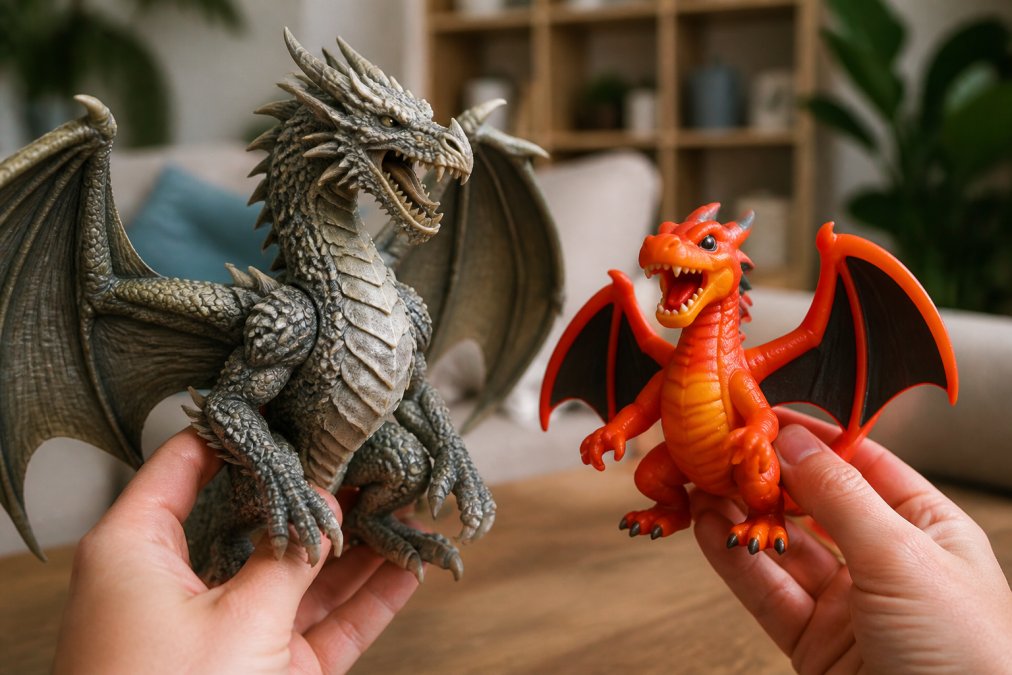
The filament decides how a piece ages. Standard PLA is rigid, cheap, and embrittles over time. Premium collectibles use tougher grades like PETG and engineering blends that flex under stress instead of cracking. Pick up two figures side by side: one feels hollow and light, the other has real density in the hand. That density is filament weight, and filament weight is money.
The Difference Between a Display Piece and a Throwaway Figurine
A throwaway figurine is decorative until someone touches it. A display piece is built to be handled, posed, and shown off for years. The distinction lives in wall thickness, joint design, and how carefully the model was sliced. Premium 3D printed collectibles are engineered objects, not extruded trinkets.
3D Printing Quality Standards That Separate Premium from Budget
3D printing quality standards come down to three machine settings: layer height, infill density, and wall count. Layer height is the vertical thickness of each pass in millimeters; lower layers mean smoother surfaces and dramatically longer print time. Infill density is how much material fills the inside of the model. A budget print might run 10% infill and 0.28 mm layers to finish fast, while a premium print runs finer layers with denser infill, and both choices add hours.
Layer Height, Infill Density, and What They Mean for Your Purchase
Here is what those numbers mean when the box is open:
- Layer height: 0.12-0.16 mm reads as smooth; 0.28 mm shows visible ridges you can catch a fingernail on.
- Infill density: higher infill means a heavier, more solid piece that resists crushing and holds screw threads and joints better.
- Wall count: more perimeters mean the shell survives drops that would shatter a thin-walled print.
- Build plate use: parts arranged well on the plate waste less material, and that efficiency is part of what a professional print farm charges for.
The Value of Articulated 3D Prints: Why Joints Cost More
The value of articulated 3D prints sits entirely in the joints. A print-in-place articulated figure comes off the plate with every joint already formed, meaning the designer calculated clearance tolerances measured in fractions of a millimeter. Too tight and the joint fuses solid; too loose and the limb flops and wears out. That design work happens before the printer runs, and it is the single biggest reason an articulated dragon costs more than a static figurine of the same size.
Engineering Complexity Behind Every Moving Part
Every joint adds a failure point. A figure with twenty moving parts needs every one to clear correctly on the same print, at the same time, on the same machine. When a cheaper figure snaps at the elbow after two weeks, the cause is almost always tolerance: the joint was printed too tight, stress built up, and the plastic gave out.
Post-Processing 3D Print Costs: The Hidden Labor Behind a Flawless Finish
Post-processing 3D print costs are the labor most buyers never see. Support material is removed by hand with flush cutters and needle files, layer lines get sanded through progressively finer grits, then comes primer, paint, and a clear coat. A flawless finish is not a machine output, it is a person, at a bench, for hours.
Sanding, Priming, and Painting: Time You Are Paying For
Each stage adds time and risk. Sanding too aggressively rounds off detail the designer spent days modeling, and primer coats that go on too thick fill in the fine lines that make a piece look sharp. Paint work on a detailed dragon can take longer than the print itself. A raw print and a finished collectible are two different products.
How Print Time, Material Weight, and Failure Rates Shape Your Price
Three variables drive the base cost of any print: machine time, material weight, and failure rate. A printer runs one job at a time, so a 40-hour print occupies a machine for 40 hours that could have produced several smaller items. Filament is sold by the kilogram, and a dense articulated piece can use several times the filament of a hollow figurine.
Why a 40-Hour Print Costs More Than a 4-Hour One
A 40-hour print ties up a machine, a build plate, and a queue slot for the better part of two days, during which the shop cannot run anything else. Layer height and infill density both stretch print time, and both are exactly what make a premium piece look and feel premium. Machine depreciation enters here too: every hour of runtime wears belts, nozzles, and bearings, and replacement parts are an operating expense recovered across every job.
The Overhead Layer Most Price Guides Skip
Hobbyist calculators stop at filament and electricity. A real shop cannot. Overhead is the cost of being open, spread across every piece that ships:
- Business taxes and self-employment tax. A professional print service owes federal and state income tax plus self-employment tax on net profit, and in most states sales tax on the retail sale of the finished piece. Those obligations are baked into the price, not added at the end.
- Business insurance. Product liability and shop coverage protect both the seller and the buyer. Insurance is a fixed monthly cost that every order helps carry.
- Software subscriptions. Slicers, CAD licenses, model marketplaces, and shop-management tools are recurring costs. A single commercial design license can run into the hundreds of dollars, and that cost is amortized across the pieces that use it.
- Workspace. Rent, utilities beyond the printer itself, climate control, and storage for finished inventory all count.
- Payment processing and platform fees. Card processors and marketplace platforms take a cut of every sale, and that percentage comes out of the margin unless it is priced in.
Scaling from One Printer to a Print Farm
Pricing changes the moment a shop moves from a single machine to a farm. With one printer, a job competes only with the owner's time. With ten, jobs compete with each other for queue slots, and the shop must decide which pieces are worth running. That shift creates three pricing realities:
- Queue economics. A farm earns by keeping every machine busy. Long, low-margin prints get deprioritized in favor of pieces that use machine hours efficiently, which is one reason large articulated figures carry a premium.
- Bulk material buying. Farms buy filament in larger quantities and at better rates, which can lower per-gram cost, but that savings is offset by higher fixed costs like additional maintenance, spare parts, and more complex scheduling.
- Labor specialization. At scale, one person slices, one runs post-processing, and one handles shipping. Each role adds cost, but each role also raises consistency, which is exactly what premium buyers pay for.
| Cost Factor | What Drives It | Why It Changes Your Price |
|---|---|---|
| Print time | Layer height, infill, model size | Longer machine occupancy limits how many jobs ship per week |
| Material weight | Infill density, wall count, supports | Filament is bought by weight, and waste adds up |
| Failure rate | Model complexity, joint tolerances | Failed prints consume time and material with no output |
| Post-processing | Sanding, priming, painting | Skilled hand labor is the largest single input on detailed pieces |
| Machine depreciation | Runtime hours, maintenance | Nozzles, belts, and bearings wear out and must be replaced |
| Utility costs | Heated bed, enclosure, long runs | Electricity consumption scales directly with print duration |
| Overhead and taxes | Insurance, software, workspace, sales tax | Fixed costs spread across every order, not just material |
| Shipping and packaging | Fragility, size, protection | Articulated pieces need cushioning that flat prints do not |
Quality-Based Tier Pricing: Finding the Right Premium Level for You
Quality-based tier pricing means matching the finish level to how you will actually use the piece. Not everyone needs a hand-painted display centerpiece, and not everyone wants a raw print.
The Three Tiers, and Who Each One Is For
- Tier 1, finished standard: Clean print, supports removed, light sanding. Layer height in the 0.16-0.20 mm range with moderate infill. Best for desk fidgets, everyday handling, and first-time buyers who want something durable and good-looking without collector-grade finishing.
- Tier 2, display grade: Finer layers around 0.12 mm, higher infill for weight and rigidity, smoothed surfaces, and a base coat. Best for shelf display, gifts, and pieces that will be picked up and posed regularly.
- Tier 3, collector grade: Lowest layer height, maximum infill, full hand-painting, and a sealed finish. Best for serious collectors, centerpiece displays, and memorabilia replicas where every joint and surface has to hold up to close inspection.
How to Pick Your Tier Without Overpaying
- Is it a gift or a keeper? Gifts usually land in Tier 2. Keepers and centerpieces justify Tier 3.
Why the Higher Tier Is Worth It
Most shops that scale successfully blend both: cost-plus as the floor, value-based as the target. For a buyer, that blend is good news, the tier you choose reflects a real difference in materials, machine time, and hand work, not a label slapped on the same print.
Conclusion
Pricing premium 3D printed work is not guesswork once you know what you are buying: machine time, filament weight, failure risk, hand labor, and the design work behind every joint. If you want collectibles built to that standard, from articulated dragons to detailed memorabilia replicas, Snaply3D makes precision-crafted pieces designed to be handled, not shelved and forgotten. Browse the collection and subscribe to our emails for new drops and restock alerts.
Frequently Asked Questions
How should I price my 3D prints if I want to sell them?
Start by calculating material cost, print time, machine depreciation, and post-processing labor. Add overhead costs like electricity and maintenance, then apply a markup that reflects your quality tier. Premium 3D printed collectibles with articulated joints and hand-finishing justify higher markups because of the engineering and labor involved. Use a quoting checklist to stay consistent, and review your pricing quarterly as material costs shift.
Why are articulated 3D prints more expensive than standard models?
Articulated prints require precise tolerances so joints move smoothly without snapping. That means slower print speeds, more material waste from failed attempts, and extensive post-processing to clean and test every joint. The value of articulated 3D prints comes from this engineering complexity and the durability testing each piece undergoes. A standard static model can print in one pass with minimal handling, while an articulated dragon may take multiple attempts to get right.
What factors justify a higher price for 3D printed items?
Material quality, layer height, infill density, post-processing time, and failure rate all drive cost. A premium 3D print uses higher-grade filament, prints at finer layer heights for smoother surfaces, and goes through sanding, priming, and painting. Machine depreciation and electricity consumption add to overhead. When you buy premium 3D printed collectibles, you are paying for the hours of labor and the rejected prints that never made it to market.
How does print resolution affect the value of 3D printed collectibles?
Lower layer heights (finer resolution) create smoother surfaces that need less sanding and look better on display. A 0.1mm layer height takes roughly twice as long to print as 0.2mm, which directly increases cost. For premium 3D printed collectibles, finer resolution means sharper details on scales, faces, and mechanical parts. The trade-off is print time and material waste, both of which show up in the final price.
Are premium 3D printed toys durable enough for daily use?
Yes, when they are printed with appropriate infill density and quality filament. Premium 3D printed collectibles typically use PETG or tough PLA blends that resist snapping at joints. The key is proper wall thickness and joint design. Budget prints often fail because sellers cut corners on infill or use brittle filament. Ask about material specs and joint testing before you buy, and look for photos or reviews from customers who have handled the item regularly.
What makes a 3D print premium compared to mass-produced alternatives?
Premium 3D prints offer small-batch production and hand-finishing that mass-produced toys cannot match. The value of articulated 3D prints also comes from the engineering: moving joints that are tested and tuned, not just molded in one piece. Mass-produced items are cheaper because they spread design and tooling costs over millions of units, while premium prints carry the full labor cost per item.