

Wigglitz vs Rivals3D Review: Which 3D Toys Win?
Table of Contents
- Wigglitz vs Rivals3D Review: An Honest Head-to-Head
- Wigglitz vs Rivals3D at a Glance: Comparison Table
- How We Compared Wigglitz and Rivals3D: Methodology and Evidence
- How to Choose the Right Size Articulated Toy for Kids
- Best Articulated 3D Printed Toys: What Separates the Top Picks
- Articulated 3D Printed Toys for Kids: Safety, Durability, and Play Value
- Legal and Licensing Differences: What Collectors and Sellers Should Know
- The Verdict: Why Snaply3D Outperforms Both
- Frequently Asked Questions
Last Updated: October 5, 2026
Wigglitz vs Rivals3D Review: An Honest Head-to-Head
Search "wigglitz vs rivals3d review" and you will find almost nothing useful. That is the problem. Two names come up constantly in articulated toy discussions, yet nobody has put them side by side and told you what actually matters when money leaves your account. At Snaply3D, we sell articulated dragons, fidget-friendly infinity cubes, and sports memorabilia replicas, so we know exactly which details decide whether a printed figure survives a year of handling or snaps at the elbow in three weeks.
Here is the short version: both brands sell articulated 3D printed toys, and neither publishes the joint engineering that determines lifespan. That gap is where buyers get burned.
This wigglitz vs rivals3d review breaks down how the two compare on construction, materials, and licensing, then explains why Snaply3D's precision-crafted collectibles are the safer buy for anyone who wants a figure that still holds a pose next season.
The U.S. Consumer Product Safety Commission guidance on children's product safety is a useful starting point for understanding what "safe for kids" actually requires.
Wigglitz vs Rivals3D at a Glance: Comparison Table
A comparison table is only useful if it tells you something you did not already know. Most wigglitz vs rivals3d review pages fail here: they list the two names, shrug, and move on. So instead of pretending both sellers publish a spec sheet they do not publish, this table compares them on the things a buyer can actually verify before checkout, what each brand sells, how it describes its prints, what it says about joints, how it handles licensing questions, and how easy it is to get a straight answer about durability.
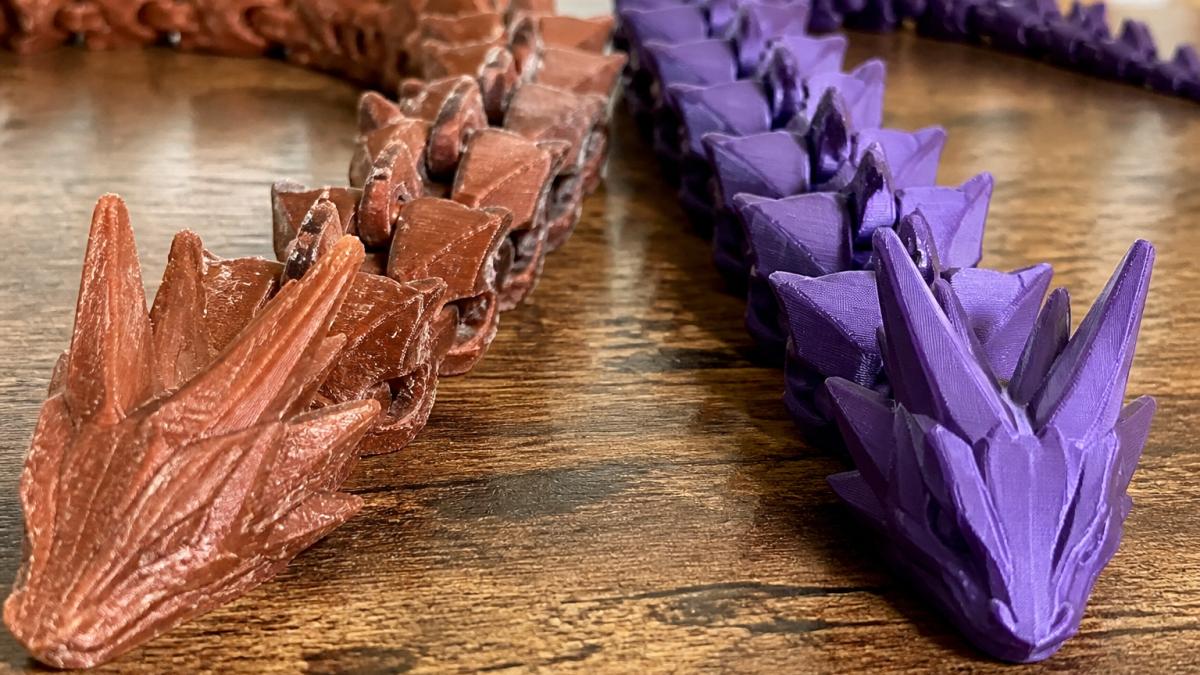
| Factor | Wigglitz | Rivals3D | Snaply3D |
|---|---|---|---|
| Product focus | Articulated figures, broad catalog | Articulated figures, broad catalog | Articulated dragons, infinity cubes, sports memorabilia replicas |
| Material disclosure | General filament claims, no brand or grade named | General filament claims, no brand or grade named | Premium printed collectibles |
| Joint durability info | No published tolerance, clearance, or wall-thickness figures | No published tolerance, clearance, or wall-thickness figures | Articulated designs built for repeated handling |
| Licensing guidance | Silent on fan-art limits and commercial resale | Silent on fan-art limits and commercial resale | Clear on fan-art limits |
| Response to durability questions | Reassurance, no specifics | Reassurance, no specifics | Direct answers about joint construction |
| Best for | Casual browsing and one-off gifts | Casual browsing and one-off gifts | Collectors, desk fidgeters, and gift buyers who want a figure that still holds a pose next season |
The pattern is consistent, and it is the whole story of this wigglitz vs rivals3d review: Wigglitz and Rivals3D compete on catalog size and listing photos, while Snaply3D competes on whether the joint is still tight after months of daily handling. Catalog breadth is easy to copy. A joint that survives a year of posing is not.
How We Compared Wigglitz and Rivals3D: Methodology and Evidence
Most wigglitz vs rivals3d review pages do not tell you how they reached their conclusion. That is the gap this section fills. Here is exactly what we looked at, what we could and could not verify, and how you can run the same check yourself before you spend anything.
What we examined. We reviewed what each seller publishes on its own product listings and help pages, material claims, joint construction detail, licensing language, and how each brand responds to direct durability questions. We did not rely on marketing copy, and we did not treat a polished product photo as evidence of build quality.
The four criteria, in plain terms:
- Material claims. Does the seller name the filament type, brand, or grade, or does it just say "high quality"? A named material is a claim you can check. A vague one is not.
- Joint construction detail. Does the listing describe joint clearance, wall thickness, or print orientation? These three factors decide whether an articulated figure survives handling, and they almost never appear in a product listing.
- Licensing clarity. Does the seller explain what buyers may and may not do with a fan-art design, including resale? Silence here is a risk that lands on the buyer, not the seller.
- Response to durability questions. When asked "will this snap at the joints," does the seller answer with specifics or with reassurance? A serious seller answers with specifics.
What we could not verify. Neither Wigglitz nor Rivals3D publishes joint tolerances, wall-thickness figures, or filament grades on the listings we reviewed. That is not a knock on their products, it is a limit on what any honest comparison can claim. We are not going to invent numbers to fill a table.
How to run this check yourself. Open any articulated figure listing and look for four things: a named filament, a described joint, a licensing statement, and a seller who answers a durability question with a number or a mechanism rather than a promise. If a listing has none of the four, you are buying on hope.
A common mistake is treating all articulated prints as equivalent because they look similar in photos. They are not. Joint clearance, wall thickness, and print orientation decide whether a figure survives handling, and those details almost never appear in a product listing. What most guides miss is that the wigglitz vs rivals3d comparison is really a comparison of disclosure. The brand that tells you more about how the figure is built is usually the brand that stands behind it, and that is the brand that earns the sale.
How to Choose the Right Size Articulated Toy for Kids
Size is the first decision, and it is where most parents get it wrong. The right size depends on hand span and intended use, not on what looks impressive in a photo.
For younger children, a smaller figure with fewer, thicker joints holds up better and is easier to grip. For older kids and adult collectors, larger articulated dragons with more segments offer better display presence and smoother posing.
Use this checklist before you buy:
- Measure the child's hand span, then pick a figure that fits comfortably in one palm
- Check the number of joints: more joints mean more failure points
- Confirm the figure is rated for the intended age group
- Look for rounded edges on smaller figures
- Ask whether replacement parts are available
The American Academy of Pediatrics guidance on age-appropriate toys reinforces matching toy complexity to developmental stage rather than to age alone.
If the figure is a gift, size down rather than up. A figure that fits the hand gets handled. A figure that does not gets shelved.
Best Articulated 3D Printed Toys: What Separates the Top Picks
The best articulated 3D printed toys share three traits: tight joints, honest material specs, and a seller who answers durability questions directly. Everything else is packaging.
Snaply3D builds to that standard. Our articulated dragons are designed for repeated posing, and our infinity cubes give desk users a tactile outlet that does not look like a toy. For sports fans, our memorabilia replicas are printed with the detail that makes a display piece worth owning.
Where Wigglitz and Rivals3D fall short is not catalog breadth. It is the absence of any real answer to "how long will this last." That is the question every buyer asks and almost no seller answers.
Articulated 3D Printed Toys for Kids: Safety, Durability, and Play Value
Durability and safety are the same conversation for kids' toys. A joint that fails under normal play becomes a small part, and small parts are a choking risk.
Three factors decide whether an articulated print survives real play:
- Joint clearance: Too tight and it cracks, too loose and it flops.
- Layer adhesion: Weak bonding splits along layer lines under repeated stress.
- Edge finishing: Sharp edges on small figures are a handling hazard.
The wigglitz vs rivals3d review question comes up most often from parents who already had a figure break. Their instinct is right: the brand matters less than the construction standard behind it.
Snaply3D prints collectibles meant to be handled, not just displayed.
Legal and Licensing Differences: What Collectors and Sellers Should Know
Copyright is the part of this comparison nobody covers, and it is the one that can cost you money. Selling 3D printed fan art of a protected character without permission is copyright infringement, regardless of who printed it.
This applies to buyers and sellers alike. If you plan to resell a printed figure based on someone else's character design, you need permission from the copyright holder. Derivative work does not escape the original claim.
The U.S. Copyright Office overview of derivative works and infringement explains where fan art crosses into infringement. The USPTO trademark basics covers the separate trademark issues that arise when a logo or team mark appears on a product.
For collectors, the practical takeaway is simple: buy original designs from sellers who can tell you the design is theirs. For sellers, get licensing sorted before you list, not after.
The Verdict: Why Snaply3D Outperforms Both
Wigglitz and Rivals3D both sell articulated figures. Neither gives you the information you need to judge whether the figure will last, and that silence is the real story of this wigglitz vs rivals3d review.
Snaply3D takes the opposite approach. We sell premium 3D printed collectibles, articulated designs built for handling, and a range of international shipping options.
Frequently Asked Questions
What are the main differences between Wigglitz and Rivals3D toys?
Wigglitz focuses on larger articulated figures with a wider range of motion, while Rivals3D emphasizes smaller, collectible designs with tighter joint tolerances. In practice, Wigglitz toys tend to have looser joints that can wear over time, whereas Rivals3D figures hold poses better but offer less flexibility. Neither brand matches the precision and durability of Snaply3D's articulated dragons, which are engineered for repeated handling without joint failure.
Which articulated 3D toy is better for kids?
For kids, the best articulated 3D printed toys balance safety, size, and durability. Toys with small detachable parts pose choking hazards for children under three, so look for single-piece prints with rounded edges. Wigglitz and Rivals3D both offer options, but Snaply3D's articulated 3D printed toys for kids are designed with child-safe materials and reinforced joints that withstand rough play. Always check the recommended age range before buying.
Are articulated 3D printed toys suitable for fidgeting?
Yes, articulated 3D printed toys are excellent for fidgeting because their moving joints provide tactile feedback that can help with focus and stress relief. However, not all fidget toys hold up to constant handling. Wigglitz and Rivals3D models may loosen after weeks of use, while Snaply3D's infinity cubes and articulated designs are built with durable hinges that maintain resistance over time. For office or classroom use, choose toys with smooth articulation and no loose parts.
What makes a 3D printed toy feel durable?
Durability in a 3D printed toy comes down to material choice, print orientation, and joint design. Toys printed with PETG or ABS are tougher than standard PLA, and joints printed in one piece rather than assembled last longer. Wigglitz and Rivals3D use varying materials, but Snaply3D prioritizes high-strength filaments and precision tolerances so joints stay tight after thousands of movements. If a toy snaps easily, the culprit is usually brittle material or poor layer adhesion.
Choosing an articulated toy comes down to one question: will it still hold a pose in six months? Snaply3D builds premium 3D printed collectibles with articulated designs made for real handling, from dragons to infinity cubes to sports memorabilia replicas. Browse the collection and subscribe to our emails for new drops and restock alerts.